The Journey: Why I Chose a New Path
My departure from academia was not an accident; it was a deliberate transition. Between 2020 and 2025, movements like #IchBinHannah laid bare the structural precarity facing early-career researchers. But for me, the realization was also personal: while the academic system often rewards narrow specialization, my strength lies in connecting contexts. I thrive when translating perspectives across disciplines and making sense of complex systems.
I didn’t “exit” academia in a single moment. I prepared by completing a science management certification, taking mentoring and career development opportunities but most importantly, taking on additional (often voluntary) roles alongside my PhD to expand my professional scope.


The Shift: From Experiment and discovery to systemic impact
Each role since leaving academia has allowed me to see the scientific ecosystem from a different vantage point:
- Supporting the People: In my first role, as Coordinator of the Graduate Centre Life Sciences, I focused on the environment of science. Here, I moved from producing knowledge to supporting the scientific process by helping early-career researchers navigate the system and ensuring they had the structural support, counseling, training and networking needed to thrive. Yet, I was also looking at the systemic level. By drafting amendments to doctoral regulations and securing the strategic continuation of the center, I learned that the individual researcher’s success is inseparable from the institutional rules that govern them.
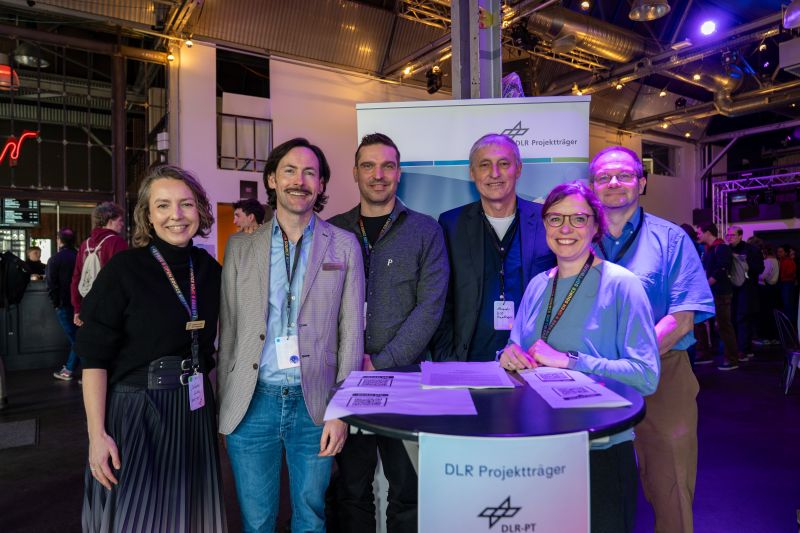
- Driving Innovation Policy: Next, I moved into the operational engine of German innovation as a Scientific Officer at DLR Projektträger, so away from being at the receiving end of funding to translating policy into practice. I was involved in the implementation of the BMBF’s AI Action Plan and liaising with representatives of academia, government and industry, both at national and international level. I consulted with applicants, reviewing proposals to assess their potential and eligibility for funding and then accompany the projects on their way to marketable products, processes or services. By evaluating programs like the “Prototype Fund” and early-career DAAD grants, I provided the evidence-based recommendations used to refine these funding schemes.
- Architecting Evidence for Impact: Today, I work on a specialized contract with focus on the BMUKN’s Federal Action Plan on Nature-based Solutions for Climate and Biodiversity. When the government invests billions, it needs proof of success. I don’t collect the data; I architect the systems that ensure its quality and transparency. By defining indicators and building the data infrastructure, I create the foundation for large-scale policy evaluation. Beyond the technical setup, I bridge the gap between ministries and stakeholders, ensuring that scientific evidence translates into political accountability.
In short: I moved from generating knowledge to supporting the next generation behind it, managing the operations and shaping the policies that fund innovation, and now, architecting the systems that hold strategy accountable.
What I Offer: Experience-Based Career Perspectives
Many PhDs misunderstand the non-academic market and underestimate their own versatility.
I don’t offer motivational “success models” or generic advice. Instead, I provide a grounded, experience-based perspective on navigating roles in science management, evaluation, and policy.
Core Talk Topics:
- The Landscape: I can map diverse roles that exist far beyond the faculty track, ranging from university management to project agencies with aspects of funding operations, policy and evaluation.
- The Mindset Shift: How to stop seeing yourself as a “narrow specialist” and start presenting yourself strategically to the non-academic market.
- Deep Dive: Networking & Strategy: How to build a bridge while you are still on the “island” of your PhD.
- Deep Dive: Transferable Skills: Identifying the high-value competencies academia taught you (and identifying the gaps you may need to fill).
References
Previously Invited Talks
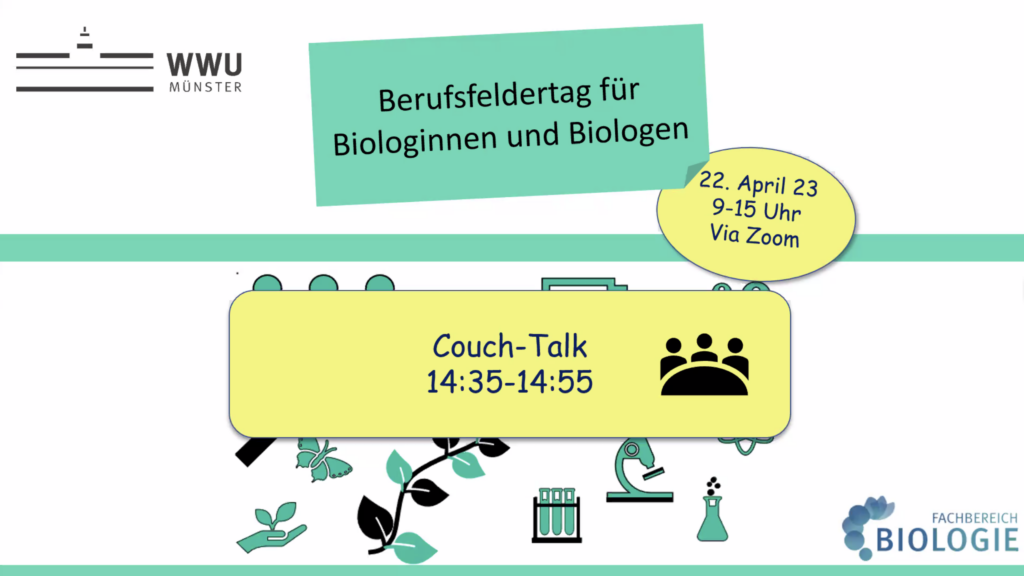
- 2023-04-20: Berufsfeldertag, Westfälische Wilhelms-Universität Münster
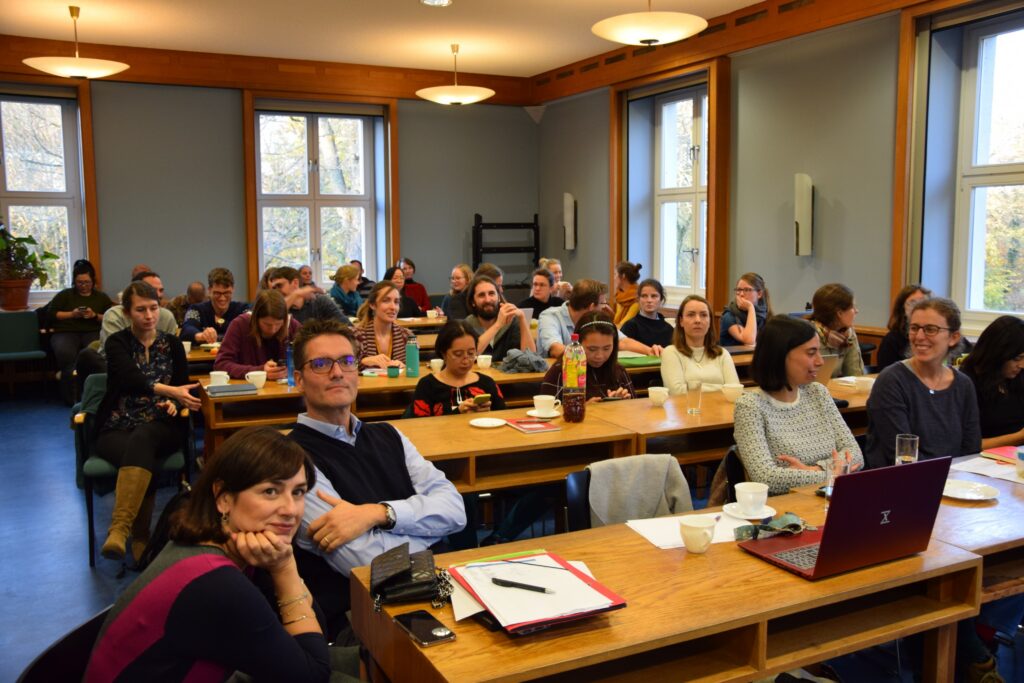
- 2023-10-20: “Careers Outside Academia” Seminar, Leibniz-IGB Berlin
- 2026-06-17: “Careers Outside Academia” Session at PhD Retreat, Graduate Programm CompCancer of Max Delbrück Center
Previously Organized Seminars
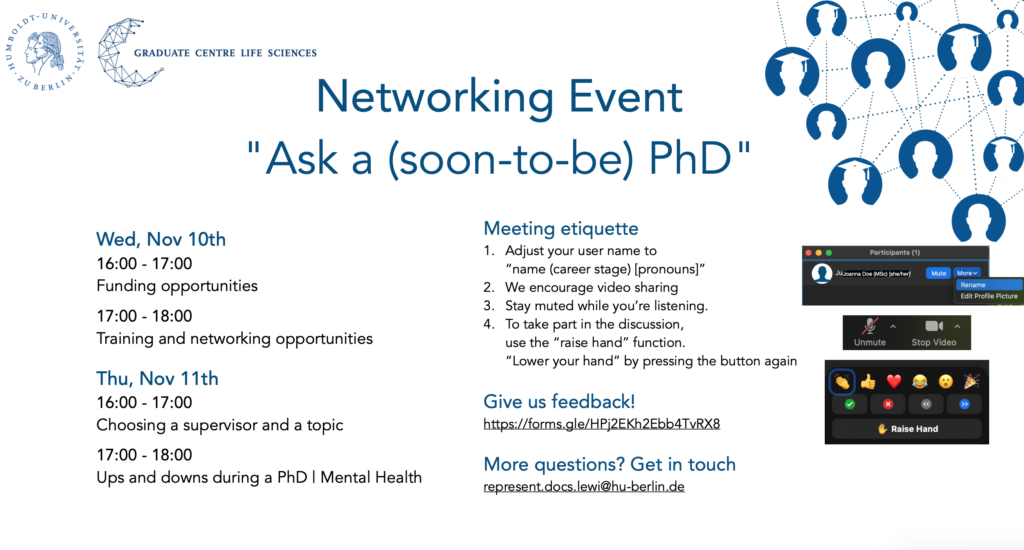
- 2021-05-06: “Ask a (soon-to-be) PhD” Networking Event, Humboldt University Graduate Centre Life Sciences
- 2021-11-10: “Ask a (soon-to-be) PhD” Networking Event, Humboldt University Graduate Centre Life Sciences
Inquiries
I have delivered these insights as an invited speaker for universities and graduate schools (available on-site or online), consistently receiving feedback that participants value the honesty and practical clarity.
- Keynote/Talk (1–2 hours): An overview of the career transition, ideal for career days or colloquiums.
- Panel/Roundtable Contributor (1–2 hours): My contributions move beyond the binary of “staying vs. leaving,” focusing instead on marketability, literacy in science management, and the identity shift from niche specialist to systemic translator.
- Interactive Workshop (Half/Full-Day): A deep dive into networking strategies and skill-mapping for PhDs and Postdocs.
If you are interested in bringing this perspective to your institution, feel free to…